
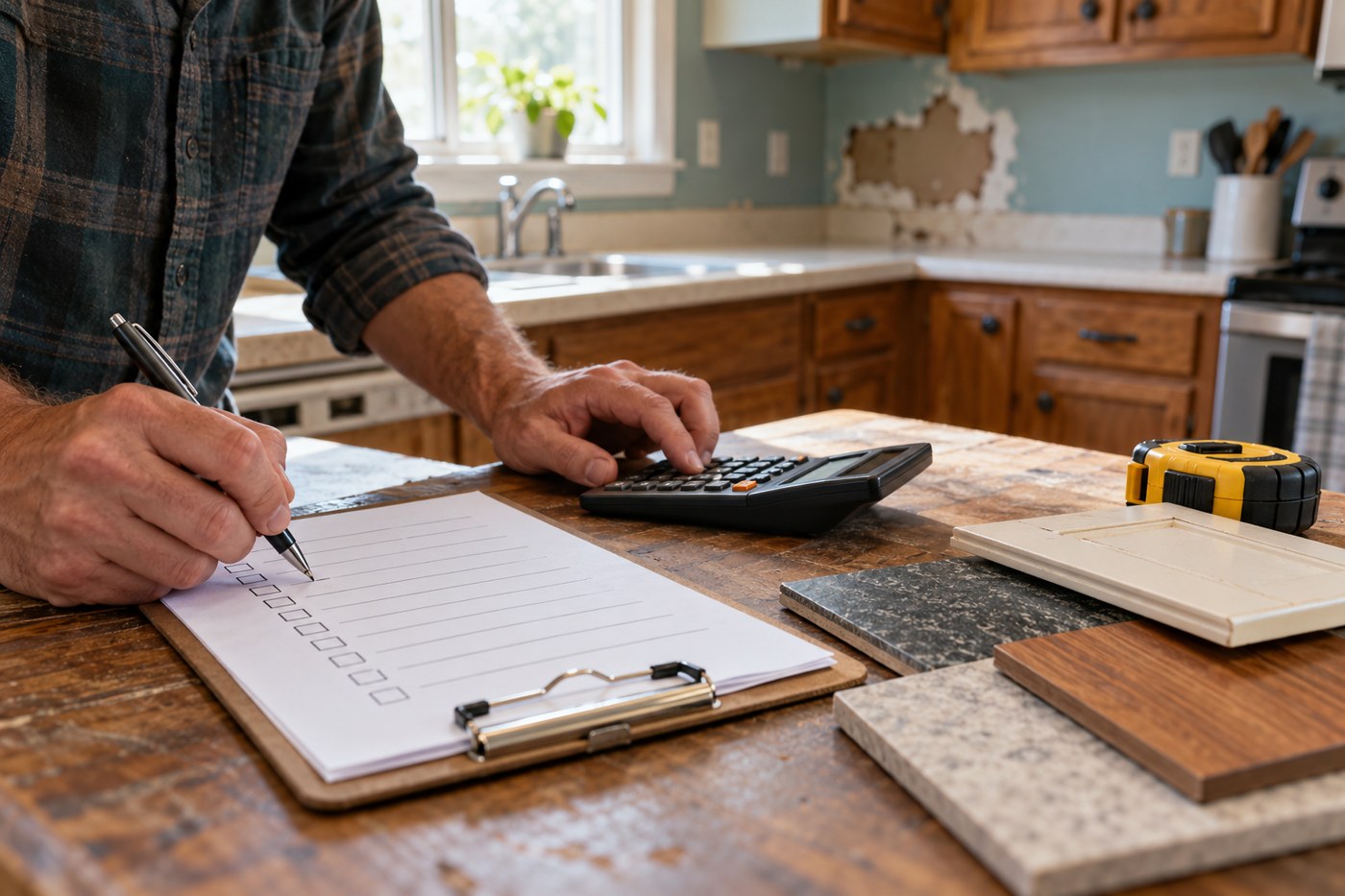
Start with what someone actually saw
A buyer walks through the house and says the roof, wiring, and kitchen need work. A large number follows. Before arguing about that number, ask a smaller question: what exactly belongs inside it? A repair discussion becomes useful when the parties distinguish observed conditions from suspected conditions, cosmetic preferences, and changes the next owner simply wants. You can acknowledge an old kitchen without accepting that every cabinet must be replaced before anyone could use it. You can also acknowledge a stain without claiming to know its cause.
Build a condition sheet with four columns: location, observation, information already available, and unanswered question. For the ceiling stain, record the room, whether you have seen active water, available repair receipts, and whether further investigation is needed. Avoid diagnosing wiring or structural concerns yourself. Existing documents are evidence of work recorded, not proof that every current problem is resolved. The purpose is to give an appropriate professional a clear starting point and keep the discussion attached to the actual property.
Ask for scope before discussing the total
A scope describes the work being priced. Ask whether the proposal covers investigation, removal, replacement, finishes, cleanup, or other items. Does a roof allowance assume a patch or replacement? Does bathroom work include a cosmetic refresh or an inaccessible plumbing problem? These distinctions can change the conversation without requiring you to become a contractor. If a buyer offers a deduction rather than a contractor estimate, label it as the buyer’s allowance and ask which assumptions shaped it. The two documents serve different purposes.
For work you might commission, request a written contractor scope that identifies exclusions and conditions that could change the estimate. Tell the contractor your decision is whether to repair before selling, not whether to build your dream renovation. Ask about access, scheduling, payment, and any local approval process that applies. Get appropriate qualified help for safety issues. A low number with missing tasks is not necessarily a useful comparison with a higher number that includes them, so place comparable scopes beside each other.
Keep three budgets separate
Use one budget for making the property safe while you own it, one for preparation you might choose before marketing, and one for a buyer’s intended improvements after purchase. Some tasks may overlap, but combining all three produces a misleading total. A future buyer’s taste is not automatically your selling obligation. Equally, describing a sale as as-is does not make known conditions disappear or answer disclosure and contractual questions. Ask the appropriate local professional how those obligations apply to your property and proposed agreement.
Add timing to each budget. A repair that takes two days to perform might still require weeks of appointments, materials, and follow-up. Write your actual carrying expenses and the limits on your availability beside the estimate. You may decide the work is worthwhile, or you may prefer an agreement that leaves it to the purchaser. Make that decision from current costs and practical capacity. Money already spent on a project is relevant history, but it does not compel you to keep spending until an imagined finish line appears.
An example with deliberately incomplete information
Imagine a house with a tired bathroom and a damp patch near a window. One proposal combines a full bathroom renovation and extensive wall replacement into a single allowance. Another separates window investigation from optional bathroom updates. Neither proposal is proven correct by sounding confident. Ask what inspection supports each assumption and what happens if investigation reveals something different. These are hypothetical examples, not price estimates. The important change is that uncertainty has a name instead of being hidden inside one intimidating round number.
When an offer changes after inspection, ask for the revised written terms and a clear explanation of the change. Review the agreement’s inspection provisions with an appropriate adviser. Do not assume you must accept every newly proposed deduction, and do not assume the buyer is obligated to ignore a material finding. Compare the revised outcome with your other realistic options, including their costs and delays. A calm explanation of scope is more useful than trying to win an argument about whether the house is good or bad.
Leave the conversation with a decision sheet
End the review by marking each item accepted, disputed, awaiting investigation, or optional. Name the person responsible for the next answer and set a reasonable date for checking back. Save photographs and written scopes with the offer version they informed. If the parties agree that work or contents remain, have that understanding reflected appropriately in the transaction documents. A friendly assurance about taking care of everything should not replace the terms you will actually rely on when the moving date arrives.
Your next step can be modest: request one clarified scope, locate a receipt, or ask a qualified contractor to assess a specific concern. You do not need to solve every project simultaneously to understand the choice. The Pad Offer can discuss a property in its present condition, but any useful conversation still starts with accurate facts and clear responsibilities. A repair list becomes manageable when you can see what is known, what remains uncertain, and which tasks each proposed selling route would leave on your shoulders.
General educational information. Examples are illustrative; local requirements and individual circumstances vary. Professional legal, tax, housing, or real estate advice may be appropriate for your situation.